Nothing about us, without us.
The AuDHD Council of Australia is a registered not-for-profit company limited by guarantee, and run by a CEO with lived-experience.
Our Mission
To improve employment access, retention, and career sustainability for people with AuDHD by influencing workforce policy, employer practice, and professional membership structures.
Our Purpose
Representing AuDHD professionals from the time they plan to enter the workforce, all the way through their career, and into leadership positions.
Addressing structural barriers and help build environments where AuDHD professionals can thrive in the workplace.
Our Founding Story
The AuDHD Council of Australia was established in response to a clear and persistent gap across employment, policy, and community understanding in Australia. Individuals with AuDHD; those with co-occurring Autism and ADHD; have long navigated systems that treat these identities separately, or overlook them entirely. This has resulted in a disconnect between capability and opportunity, where many individuals are excluded not because of a lack of ability, but because the environments and systems they work within have not been designed with them in mind.
Board of Directors
Our leadership team brings together decades of lived experience and professional expertise in disability advocacy, law, healthcare, and community building.
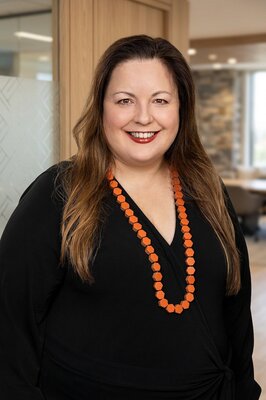
Georgia Siabanis
Board Director, Chairperson

Cameron McConnachie
Board Director, Vice-Chair

Bradley Taylor
Board Director, Treasurer

Catherine Squire
Board Director, CEO
Frequently Asked Questions
Answers to common questions about the AuDHD Council, membership, and our work.
Ethical Standards
The AuDHD Council of Australia is committed to the highest standards of ethical conduct, transparency, and accountability.
We act in the best interests of our members and the broader community by upholding integrity in decision-making, managing conflicts of interest appropriately, and ensuring that our work is evidence-informed, inclusive, and respectful of lived experience.
Our governance practices are designed to safeguard trust, promote fairness, and ensure the responsible stewardship of resources while advancing the Council's purpose.
Director elections
The AuDHD Council of Australia is a company limited by guarantee governed by the Corporations Act 2001 (Cth) and its Constitution. Directors are elected by Ordinary Members at each Annual General Meeting (AGM). The board comprises a minimum of three and a maximum of nine directors; the Constitution specifies exact term lengths and retirement rotation.
The board may also appoint directors to fill casual vacancies between AGMs, subject to ratification by members at the next AGM. Candidates must meet eligibility criteria set out in the Corporations Act and the Constitution, including consent to act as a director and disclosure of any disqualifying matters.
Notices of AGM, nomination procedures, and candidate information are distributed to all eligible members in accordance with the Constitution and the Act. [OWNER TO REVIEW: insert current term length and nomination deadline]
Conflicts of interest
All directors are required to disclose material personal interests in matters before the board, as required by section 191 of the Corporations Act 2001 (Cth). A director who has declared a conflict of interest does not receive board papers related to that matter, does not participate in the relevant discussion, and does not vote on the resolution.
The Council maintains a conflicts-of-interest register, which is reviewed at each board meeting. Where a potential conflict relates to an ongoing relationship — such as a commercial engagement or a personal relationship with a member — the director discloses this at the commencement of their term and updates the register as circumstances change.
The same expectations apply to senior staff and contractors in roles that involve material financial or policy decisions on behalf of the Council.
Policies
Our governance documents are publicly available and reflect our commitment to transparency and accountability.
Privacy Policy
How we collect, use, store, and protect your personal information in accordance with the Australian Privacy Act 1988.
View PDF →Membership Policy
The terms, conditions, eligibility criteria, and obligations that apply to all categories of membership with the Council.
View PDF →Code of Conduct
The values and behavioural standards expected of all members, board directors, staff, and representatives of the Council.
View PDF →Constitution
The foundational governing document of the AuDHD Council of Australia Limited, setting out the objects, membership classes, board composition, and decision-making rules.
View PDF →